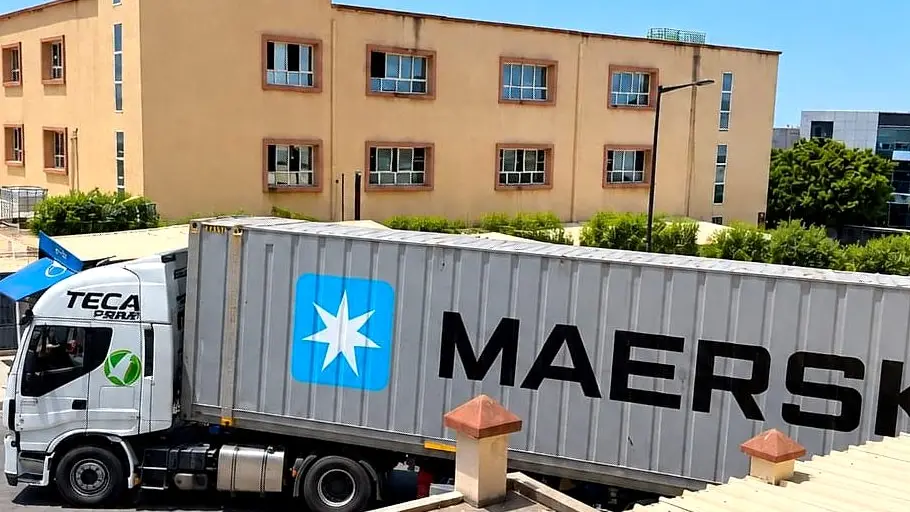
For years, the default answer to “where do we produce?” was Asia. Long lead times and large minimums were the price of low unit costs. Since the shipping disruptions of recent years, more European brands have started to look closer to home, and Morocco is one of the first places they look.
Distance you can measure in hours
Tangier sits on the Strait of Gibraltar, 14 km from the Spanish coast at its narrowest point. Ferries between Tanger Med and Algeciras take about 90 minutes and run many times a day, and trucks continue by road to warehouses in Spain, Portugal and France.
Compare that with sea freight from the Far East. When Red Sea routes are disrupted, ships sailing around the Cape of Good Hope can add 10 to 14 days to the journey. For a fashion calendar, that difference decides whether a style reaches stores while it is still selling.
Duty-free access to the EU
Morocco and the European Union have had an Association Agreement since 2000. Garments that meet the rules of origin enter the EU free of customs duty.
Morocco is also part of the Pan-Euro-Mediterranean system. Under its cumulation rules, fabric from the EU or from partner countries can count towards origin, depending on the product. The exact rule depends on the garment and the materials, so it is worth checking for each order rather than assuming.
A workforce that knows European standards
Tangier is the centre of Morocco’s garment industry. A large share of the country’s garment workers are based here, alongside suppliers of trims, packaging and logistics. Factories in the region work every day with the quality, compliance and timing requirements of European retailers.
That experience shows in small things: sample comments are understood, packing lists are followed, and audit expectations are part of normal work rather than a special event.
What changes for your team
Nearshoring is not only about transport time. It also changes how you work:
- Faster decisions. Your team can visit the factory and be back the same week.
- Smaller risks. Shorter transit means less stock in the pipeline and more room to react to sales.
- Easier communication. French and Spanish are widely spoken in Tangier, and working hours overlap with European offices.
Is Morocco right for every product?
Not always. Very large basic programmes with long planning horizons may still make sense in Asia. Morocco works best for fashion styles, repeat programmes that need quick replenishment, and collections where timing matters more than the last cent of unit cost.
If you are considering Tangier for your next season, send us your brief. We’ll tell you honestly whether your styles are a good fit for our lines.